How India Missed the Window to Halt Pakistan’s Nuclear Program
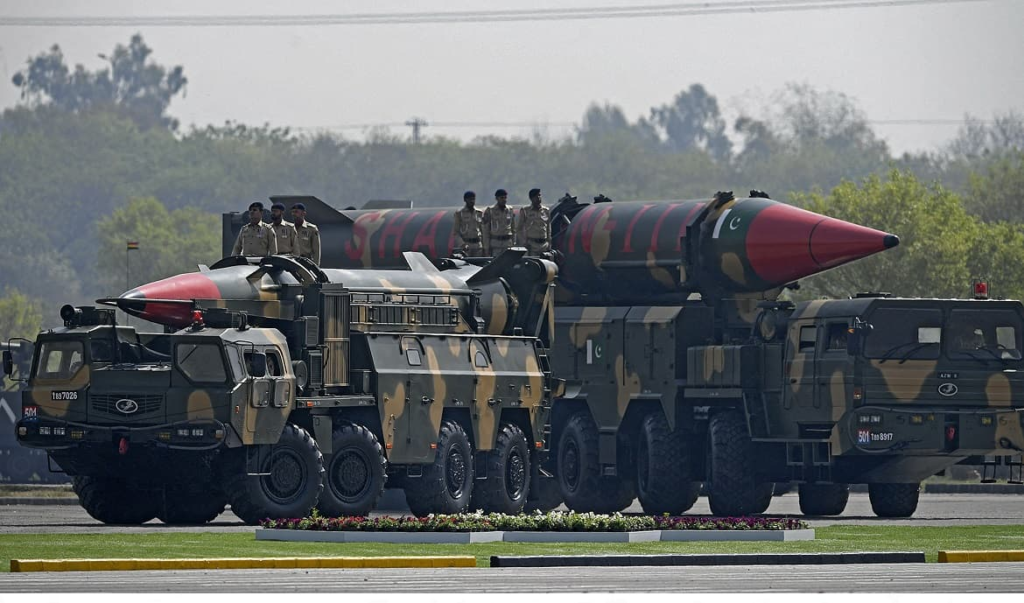
India’s inability to stop Pakistan’s nuclear program was the result of a complex interplay between intelligence failures, geopolitical constraints, and shifting domestic political priorities during the 1970s and 80s.
The 1974 “Smiling Buddha” test (Pokhran-I) was India’s first nuclear detonation. While a major scientific milestone, it was technically a “near failure” and triggered a decades-long period of international isolation that significantly hampered India’s strategic options. Though officially declared a success, several internal and technical issues surfaced. Some of the major issues were related to Yield Discrepancy, Data Collection, Design and many more including The “Plutonium Trap”: A Scientific Hubris
Technical “Failures” and Limitations
Yield Discrepancy: While India claimed a yield of 12–15 kilotons, international observers and later US intelligence assessments estimated it was much lower, likely between 4–6 kilotons.
Data Collection Issues: The blast was so powerful it destroyed many of the recording instruments intended to gather critical performance data. This left Indian scientists without the comprehensive data needed to immediately refine the design.
Unproven Design: US cables later suggested the design was “unproven” and required significant reworking, which is why the scientific community pushed so hard for the Pokhran-II tests 24 years later.
No Weaponization: India did not immediately turn the device into a deliverable weapon, remaining in a state of “nuclear ambiguity” for decades.
Immediate International Aftermath
The global reaction was swift and punitive, primarily because India used plutonium from the CIRUS reactor, which was supplied by Canada for “peaceful purposes”
- Formation of the NSG: The most lasting consequence was the creation of the Nuclear Suppliers Group (NSG) in 1974, specifically designed to prevent other nations from following India’s path by strictly controlling the export of nuclear materials.
- Sanctions and Embargoes: Canada immediately froze all nuclear cooperation. The US passed the Nuclear Non-Proliferation Act (NNPA) in 1978, cutting off fuel supplies for India’s Tarapur plant and denying access to high-end computing and defense technology.
- The 24-Year Gap: These sanctions were so effective that they “fettered” India from further testing until 1998, as the country was too economically dependent on external aid to risk further backlash.
Impact on Nearby Communities
Residents of villages near the Pokhran range, such as Loharki and Khetolai, reported severe long-term health and environmental consequences:
- Health Crises: Villagers reported a surge in cancer cases, genetic abnormalities, and birth defects in the years following the test.
- Environmental Damage: Reports noted that groundwater became contaminated, crops turned white, and local livestock suffered from skin diseases and malformations.
- Lack of Recognition: The Indian government has historically maintained that radiation levels remained normal, leaving residents without formal medical studies or compensation for long-term health impacts.
Strategic Consequences
A critical strategic failure in the aftermath of the 1974 “Smiling Buddha” test was India’s persistent analytical bias, which blinded its leadership to Pakistan’s true nuclear path.
Pakistan’s Accelerated Response: The test gave Zulfikar Ali Bhutto the political leverage to launch Project-706, Pakistan’s own crash program to “eat grass” if necessary to build a bomb.
Regional Nuclearization: Rather than acting as a deterrent, it turned South Asia into a “nuclear hotspot,” eventually forcing a full-scale arms race that culminated in the 1998 tit-for-tat tests.
The “Plutonium Trap”: A Scientific Hubris
Because India had spent decades mastering the difficult plutonium reprocessing route, Sethna and his peers believed Pakistan—with its smaller industrial base—would have to do the same. And then there was also a documented “Brahminical contempt” for Pakistani engineering, with Indian experts assuming that if India struggled with plutonium, Pakistan could never achieve the even more complex uranium enrichment. While India focused its intelligence resources on tracking plutonium-related equipment (like reprocessing plants), it completely missed Dr. A.Q. Khan’s clandestine acquisition of uranium centrifuge technology. Pakistan’s shift to the uranium route via Project 706 was essentially invisible to New Delhi for years because Indian intelligence wasn’t looking for centrifuge components. It wasn’t until April 1979 that India’s Joint Intelligence Committee (JIC), under K. Subrahmanyam, finally confirmed Pakistan possessed centrifuge technology. By then, the Kahuta facility was already well-advanced. This bias meant that while Pakistan was “stealing” Western nuclear secrets for uranium enrichment, India was still monitoring outdated plutonium indicators.
“We know what you’re doing in Kahuta” – Shri Morarji Desai, Prime Minister of India (1977-1979)
In the late 1970s, Prime Minister Morarji Desai reportedly told Pakistani President Zia-ul-Haq that India was aware of the Kahuta enrichment plant. This tip-off led to the exposure, torture, and execution of several R&AW agents, effectively blinding Indian intelligence inside Pakistan. This failure directly led to the desperate, later-aborted plans for a pre-emptive strike on Kahuta, as India realised Pakistan had “leapfrogged” their expectations. According to accounts from former R&AW officers, the slip occurred during one of the many “friendly” phone calls initiated by Zia-ul-Haq, who often used topics like urine therapy to keep Desai in a relaxed and talkative mood. The leak alerted Pakistan that their top-secret project had been breached, leading to a ruthless internal “witch-hunt”. It is widely reported that this single conversation led to the capture, torture, and execution of several Indian agents who had infiltrated the facility. Pakistan immediately tightened security and moved critical operations further underground, effectively blinding Indian intelligence access to the site for years.
Desai's actions are still debated by experts; some view it as a disastrous pursuit of "peace through transparency," while others in the intelligence community, like B. Raman, noted that "indiscreet political leaders are the unavoidable occupational hazards of the intelligence profession"
Geopolitical Constraints, US Relations & Aborted Military Operations – The ultimate failure
During the 1980s, Pakistan was a critical conduit for the U.S. to arm Afghan mujahideen against the Soviet Union. To ensure Pakistani cooperation, the Reagan administration repeatedly provided waivers for nuclear-related sanctions (such as the Symington Amendment) and even allegedly tipped off Pakistan about potential Indian military strikes. The Indian military initially viewed nuclear tests as “peaceful” distractions and remained focused on maintaining a conventional military edge rather than preparing for a nuclearized adversary. 1981 and 1984 to destroy Pakistan’s uranium enrichment facility at Kahuta. Inspired by Israel’s successful Operation Opera against Iraq’s Osirak reactor in 1981, India and Israel reportedly came close to executing a similar pre-emptive strike, we now know it as infamous “Kahuta Raid”
The operation was envisioned as a high-stakes surgical strike designed to “de-nuclearize” Pakistan before it could finalize its weaponization. The operation was envisioned as a high-stakes surgical strike designed to “de-nuclearize” Pakistan before it could finalize its weaponization. Israel offered its technical expertise and aircraft, fearing the rise of an “Islamic Bomb”. Israeli F-16 and F-15 fighters were to use Indian airbases—primarily Jamnagar in Gujarat and Udhampur in Jammu & Kashmir—for staging and refueling. India’s Jaguar deep-strike aircraft were also considered for support roles. Plans involved flying low along the Himalayas to avoid radar detection before striking the facility near Islamabad.
Despite initial approval by Prime Minister Indira Gandhi in early 1984, the mission was repeatedly deferred and eventually shelved due to three primary factors namely fear of retaliation, US Intervention, Domestic Instability
Due to fear of retaliation since Unlike Israel and Iraq, India and Pakistan are neighbors; a strike would have likely triggered a total war and immediate Pakistani strikes on Indian nuclear sites using newly acquired F-16s. India was also at that time grappling with major internal insurgencies in Punjab and Kashmir. Israel offered its technical expertise and aircraft, fearing the rise of an “Islamic Bomb”. Pakistani scientists, including Munir Ahmad Khan, warned that any strike on Kahuta would trigger an immediate retaliatory strike on India’s nuclear facilities at Trombay, potentially causing a nuclear catastrophe in Mumbai.
The Reagan administration, which relied on Pakistan as a frontline state against the Soviet Union in Afghanistan, reportedly warned India of “consequences”. The CIA allegedly tipped off Islamabad about the plan, leading Pakistan to place Kahuta on high alert and lose the mission’s element of surprise.
In 1984, India was grappling with severe internal unrest, including the Bhindranwale insurgency in Punjab and the eventual assassination of Indira Gandhi, which shifted national focus away from external military adventures.
The failure to execute the raid is often cited by strategic analysts as a “historic blunder” that allowed Pakistan to achieve full nuclear status by 1998. By 1988, both nations India and Pakistan led by Rajiv Gandhi & Benazir Bhutto respectively, signed the Non-Attack Agreement, formally legally prohibiting any future strikes on each other’s nuclear installations treaty which remain in effect.