

In 2026, the world feels tense in a way that is both modern and ancient at the same time. Nations possess cutting-edge technologies—drones, artificial intelligence, cyber warfare systems—yet the fundamental challenges of humanity remain unchanged. Conflicts such as the ongoing Russia–Ukraine war and rising tensions involving the United States, Iran, and Israel reveal a sobering…
There is something deeply unsettling about the world in 2026—and it is not just the wars themselves. It is how normal they have started to feel.
The conflict between Russia and Ukraine no longer carries the same shock it once did. What began as a moment that shook global stability has gradually turned into a familiar pattern—updates, counter-updates, statements, condemnations, and then silence. The rhythm repeats, but the emotional weight diminishes. War, once extraordinary, has become routine.
At the same time, tensions involving Israel, Iran, and the United States continue to simmer, escalating in bursts before retreating into uneasy calm. Each flare-up is explained, justified, and absorbed into the broader narrative of global politics.
And that is where the real danger lies—not just in the existence of war, but in its normalization.
Because once war becomes familiar, it stops being interrogated. Once it stops being interrogated, it becomes easier to justify. And once it becomes easy to justify, it becomes easier to repeat.
Strip away the language of geopolitics, and modern wars are not as complicated as they are made to appear. They are framed in terms of national interest, strategic depth, and security concerns, but beneath those frameworks lie far more basic human instincts: fear of losing influence, desire to assert dominance, and the unwillingness to appear weak.
These are not modern inventions. They are ancient impulses, now amplified by unprecedented technological power.
This is precisely why the Bhagavad Gita feels less like an ancient scripture and more like a commentary on the present.
It begins not with action, but with doubt.
A warrior stands in the middle of a battlefield and hesitates. He is not afraid of defeat; he is troubled by the consequences of victory. He sees not just enemies, but people—teachers, relatives, relationships. He understands that even a successful outcome will come at a cost that cannot be reversed.
This moment of hesitation is profoundly important.
It is also largely absent from modern warfare.
In contemporary conflicts, hesitation is rarely visible. Decisions are presented as decisive, necessary, and often urgent. Doubt, if it exists, remains hidden behind carefully constructed narratives. Strength is projected. Certainty is performed.
But the Bhagavad Gita begins by challenging that very idea—that certainty, in moments of conflict, is not always a strength. Sometimes, it is a failure to think deeply enough.
“क्लैब्यं मा स्म गमः पार्थ नैतत्त्वय्युपपद्यते”
“Do not yield to weakness, O Arjuna.” (2.3)
This verse is often misunderstood as a call to suppress emotion. In reality, it is a call to move beyond confusion toward clarity. It acknowledges hesitation but refuses to let it become paralysis. It demands that action, if taken, must come from understanding—not impulse.
That distinction is critical.
Because in today’s world, action often precedes understanding.
Consider the Russia–Ukraine War. It is explained through competing narratives, each with its own internal logic. Ukraine presents the conflict as a fight for sovereignty and survival. Russia frames its actions in terms of security and strategic necessity. Both sides articulate their positions clearly.
But clarity of narrative is not the same as clarity of truth.
The reality of the war is far more complex and far more human than any narrative can capture. Cities reduced to rubble do not align neatly with strategic language. Families displaced across borders do not fit into geopolitical frameworks. The lived experience of war resists simplification.
A similar dynamic unfolds in the Israel–Hamas conflict. Each action is justified, each escalation explained. The language is precise, the reasoning structured. Yet the outcome remains devastating—particularly for civilians who have little influence over the decisions that shape their lives.
The Bhagavad Gita introduces the concept of dharma, often translated as duty, but more accurately understood as alignment with moral responsibility.
“स्वधर्मे निधनं श्रेयः परधर्मो भयावहः”
“Better to die in one’s own duty than follow another’s path.” (3.35)
This is not a comfortable idea. It does not allow for easy justification or convenient reasoning. It demands that actions be evaluated not by how well they are defended, but by whether they are genuinely aligned with what is right.
And this is where modern warfare becomes difficult to reconcile.
Because the line between necessity and convenience is often blurred. Decisions are influenced by political pressure, strategic interests, and public perception. What is presented as unavoidable is frequently, at least in part, chosen.
Leadership plays a decisive role in shaping these choices.
When Vladimir Putin initiated military action in Ukraine, it was not an inevitable unfolding of events. It was a decision—one that triggered consequences extending far beyond the battlefield. Economic disruption, energy crises, and geopolitical instability followed, affecting millions across the world.
Similarly, when tensions escalate between Iran and Israel, each step toward confrontation is deliberate. It may be framed as response or necessity, but it remains a choice.
And yet, once these choices are made, they are quickly reframed as inevitable.
This is how war narratives are constructed. Decisions are made, then justified, and finally accepted as unavoidable.
The Bhagavad Gita anticipates this process:
“यद्यदाचरति श्रेष्ठस्तत्तदेवेतरो जनः”
“Whatever a leader does, others follow.” (3.21)
This is not simply about influence. It is about normalization. When leaders act in certain ways, those actions set precedents. Over time, what was once extraordinary becomes ordinary.
War becomes part of the system.
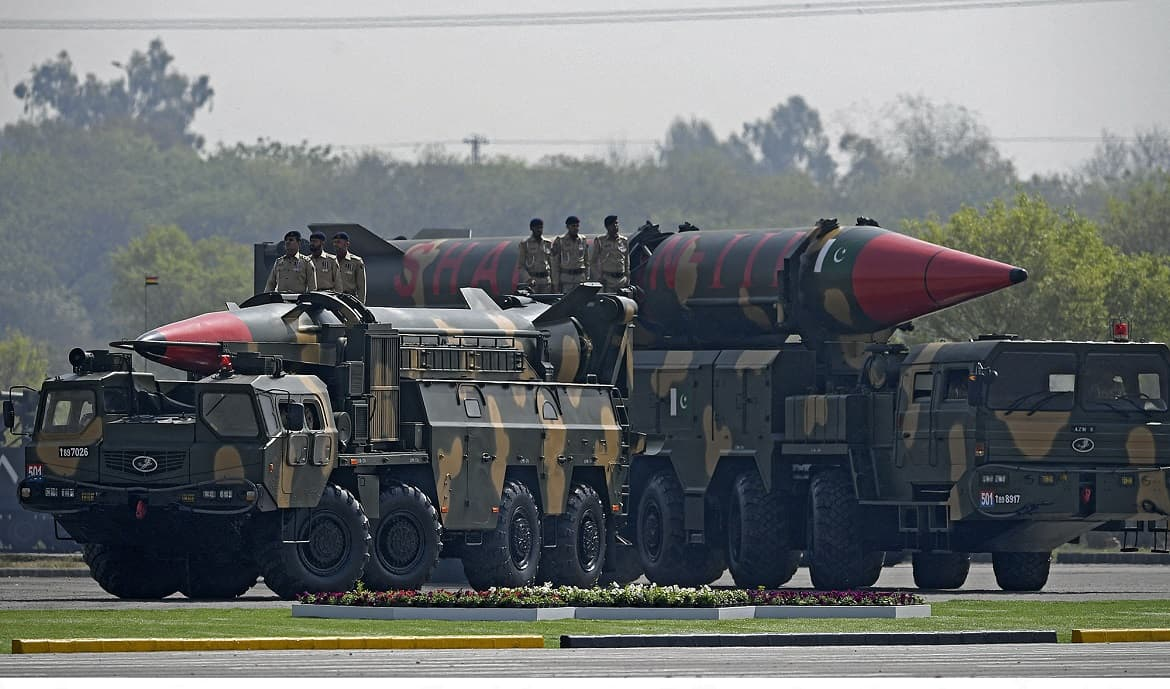
Technology has further complicated this reality. Modern warfare is often described in terms of precision, efficiency, and control. Drones, missile systems, and cyber capabilities are presented as tools that make conflict more targeted and less destructive.
But this framing is incomplete.
Precision does not eliminate suffering. Efficiency does not reduce impact. Control does not guarantee restraint.
In the Russia–Ukraine War, advanced weaponry coexists with widespread destruction. Infrastructure is damaged, economies are destabilized, and civilian life is disrupted on a massive scale. In conflicts involving Israel, technological superiority does not prevent humanitarian crises—it exists alongside them.
What technology does is create distance.
Decision-makers are physically removed from the consequences of their actions. War becomes something managed through systems rather than experienced directly. This distance can create a sense of detachment, making it easier to justify actions that have profound human consequences.
The Bhagavad Gita challenges this separation between action and awareness:
“कर्मण्येवाधिकारस्ते मा फलेषु कदाचन”
“You have a right to action, but not to its fruits.” (2.47)
This is not a call to ignore outcomes. It is a call to examine intention. It insists that actions must be grounded in clarity and responsibility, not merely justified by expected results.
In a world where the scale of action has increased dramatically, this emphasis becomes even more important.
Because the consequences of modern warfare extend far beyond the battlefield.
Civilians are no longer peripheral to conflict; they are central to it. In Ukraine, everyday life has been reshaped by uncertainty and disruption. In regions affected by the Israel–Hamas conflict, access to essential resources becomes unpredictable. The distinction between combatant and non-combatant becomes increasingly blurred.
And yet, this suffering is often treated as inevitable.
The Bhagavad Gita acknowledges suffering, but it does not accept unnecessary suffering as unavoidable. There is a difference between recognizing that pain exists and allowing systems to perpetuate it.
“दुःखेष्वनुद्विग्नमनाः सुखेषु विगतस्पृहः”
“One who remains steady in sorrow and unattached in joy is wise.” (2.56)
This teaching emphasizes resilience, but it also highlights an imbalance in modern expectations. Societies are often expected to endure suffering, while leaders are not always expected to exercise restraint.
This imbalance becomes even more evident in the aftermath of war.
The end of active conflict does not mark the end of its consequences. The Russia–Ukraine War has already led to large-scale displacement, economic instability, and long-term reconstruction challenges. Recovery will take years, and the psychological impact will persist even longer.
In the Middle East, repeated cycles of conflict demonstrate that wars rarely resolve underlying tensions. Instead, they often deepen them, creating conditions for future escalation.
The Bhagavad Gita offers a perspective that challenges this focus on immediate outcomes:
“न जायते म्रियते वा कदाचिन्”
“The soul is neither born nor does it die.” (2.20)
This idea shifts attention away from short-term victories and toward lasting impact. It suggests that actions cannot be evaluated solely based on their immediate success. Their deeper consequences must also be considered.
And this leads to the most difficult insight the Gita offers—the idea that the origin of conflict is internal.
Wars do not begin with weapons. They begin with thought. With perception. With how individuals and societies interpret threat, identity, and power. Fear becomes policy. Ambition becomes strategy. Ego becomes justification.
When these forces operate within individuals who hold power, their effects scale rapidly. Decisions that originate in internal calculations translate into actions that affect millions.
This is why the Bhagavad Gita remains relevant in 2026.
It does not simply address conflict—it explains it.
The challenge facing the modern world is not a lack of intelligence or capability. It is not a lack of information. It is a lack of reflection.
We have built systems that prioritize speed over deliberation, reaction over understanding, and strength over restraint. In such an environment, the kind of moral hesitation that defines the opening of the Bhagavad Gita becomes increasingly rare.
And yet, that hesitation is precisely what prevents unnecessary conflict.
The Gita does not offer policy solutions or geopolitical strategies. What it offers is a standard—a way of thinking that demands clarity, responsibility, and awareness.
“योगः कर्मसु कौशलम्”
“Yoga is excellence in action.” (2.50)
In today’s world, excellence in action cannot simply mean effectiveness or success. It must include the ability to act with awareness, to consider consequences beyond immediate gains, and to resist escalation when alternatives exist.
This is not an easy standard to meet.
It requires leaders to accept uncertainty, to tolerate criticism, and to prioritize long-term stability over short-term advantage. It requires societies to question narratives rather than accept them. It requires individuals to engage with complexity rather than retreat into simplified versions of reality.
But without this shift, the pattern will continue.
Wars will be justified, fought, normalized, and repeated.
And each time, they will feel slightly more acceptable than before.
The most uncomfortable truth is that none of this is inevitable.
Wars are not natural disasters. They are not beyond human control. They are the result of decisions—decisions shaped by perception, pressure, and priority.
Which means they can also be prevented.
But prevention requires something that is increasingly rare: the willingness to pause, to question, to reflect, and to resist the pressure to act simply because action is possible.
That is the lesson the Bhagavad Gita offers.
And that is the lesson the modern world has yet to fully learn.
Leave a Reply