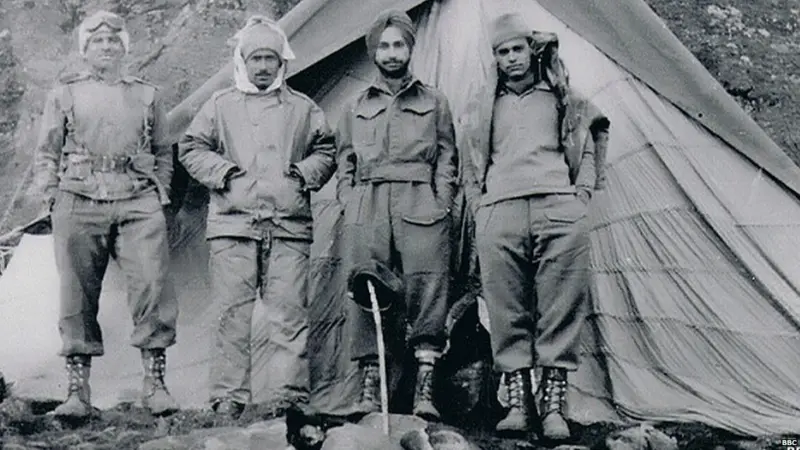
It is a common historical perception that India “offered” its UN Security Council seat to China. While Jawaharlal Nehru did decline informal U.S. and Soviet feelers in the 1950s (preferring that the seat go to the “rightful” Chinese government to maintain Asian solidarity), the transition from Hindi-Chini Bhai-Bhai to the current rivalry is one of the most significant shifts in modern history.
Often wondered, while there was once a unison of Hindi Chinni bhai bhai and India even offered its permanent seat to China, what made Chinese anti-India and ally with Pakistan considering it’s a terror state and dying economy with low GDP and buying power. Well, It is a common historical perception that India “offered” its UN Security Council seat to China. While Jawaharlal Nehru did decline informal U.S. and Soviet feelers in the 1950s (preferring that the seat go to the “rightful” Chinese government to maintain Asian solidarity), the transition from Hindi-Chini Bhai-Bhai to the current rivalry is one of the most significant shifts in modern history.
For China, the alliance with Pakistan is not based on shared values or economic success, but on cold, hard realism.
The “Geography of Containment”
China views India not just as a neighbor, but as a potential peer competitor in Asia. China’s The “Two-Front” Strategy ensures that by keeping Pakistan militarily strong, China ensures that India is perpetually distracted. If Pakistan did not exist or was friendly to India, the Indian Army could move its entire force to the Himalayan border with China. China also refers Pakistan as “Iron Brother” the concept or meaning of it in geopolitical terms, Pakistan serves as a low-cost “hired gun” that keeps India pinned down in the subcontinent, preventing India from projecting power into the South China Sea or the Pacific.
“Pakistan is to China what North Korea is to China: a problematic, unstable, and economically weak ally that is nonetheless indispensable because it keeps a major democratic rival (India/South Korea) permanently off-balance.”
Access to Indian Ocean
China has a massive vulnerability known as the “Malacca Dilemma.” Most of China’s oil and trade passes through the narrow Strait of Malacca, which the Indian Navy (and the U.S.) could easily block during a war. In a way Strait of Malacca is strait of Hormuz for India. Hence, it’s imperative that China with the help of Pakistan focus on CPEC to bypass India. Through the China-Pakistan Economic Corridor (CPEC), China has built a direct land route from Western China to the Arabian Sea at Gwadar. This gives China a back door to the Indian Ocean, bypassing Indian-controlled waters and providing a base for the Chinese Navy (PLAN) right next to the Persian Gulf.
Alliance with “Dying Economy”
While the world is witnessing eroding Pakistan’s economy and social structure with its history of terrorism, China sees these as leverage points and not deal-breakers. The demon of “Debt Trap”, A weak economy makes Pakistan more dependent on China. When Pakistan cannot pay back its multi-billion-dollar CPEC loans, China gains more control over Pakistani land, policy, and military bases. Also using Terrorism as a tool when China fears Islamic extremism in its own Xinjiang province, it uses its influence over the Pakistani military to ensure that Pakistani-based militants do not target Chinese interests, while turning a blind eye when they target India.
The Turning Point: Why China became “Anti-India”
The Hindi-Chini Bhai-Bhai era ended abruptly in 1962, and the relationship never truly recovered for three main reasons.
- The Tibet Factors: India granting asylum to the Dalai Lama in 1959 was seen by China as a direct threat to its internal security. China views India’s influence in Tibet as a “dagger” held at its throat.
- Boundary Disputes: China does not recognize the McMahon Line (the border drawn by the British). It claims Arunachal Pradesh as “South Tibet” and occupies Aksai Chin.
- Global Ambitions: As India grows (now the world’s 5th largest economy), it has aligned more closely with the United States and the QUAD (USA, Japan, Australia, India). China views this as an American-led “containment” strategy and sees India as the primary “enforcer” of that strategy in Asia.
In recent years, China has also encouraged a secondary axis between Pakistan and Turkey to create a counter-bloc to India’s growing influence in the Middle East and the Global South.
Image Credit – BBC India

Leave a Reply